
In cooler months, window tint takes longer to cure than in summer, because the adhesive cures with heat, light, and time, and all three are in shorter supply. No day count is stated here: curing time depends on the film, the glass, the weather, and where the vehicle or building sits, and the honest answer for a specific job comes from the shop that installed it. This post explains the factors, so you know what to expect and what to ask.
The short answer: cure time in cooler months
Window tint cure time in cooler months in Jeffersonville runs longer than in summer, for both automotive film and home or office film. Cooler air, shorter days, and weaker sun all slow the process. The range is wide enough that a single figure would mislead, so this site does not publish one. Ask the shop what to expect for your vehicle or building when you call.
Plan for the slower end of what the shop describes if the forecast shows a cold stretch or if the vehicle stays parked outside overnight. A heated garage helps, but it does not match summer conditions. Sun exposure matters more than most people expect.
Why cooler weather slows the curing process
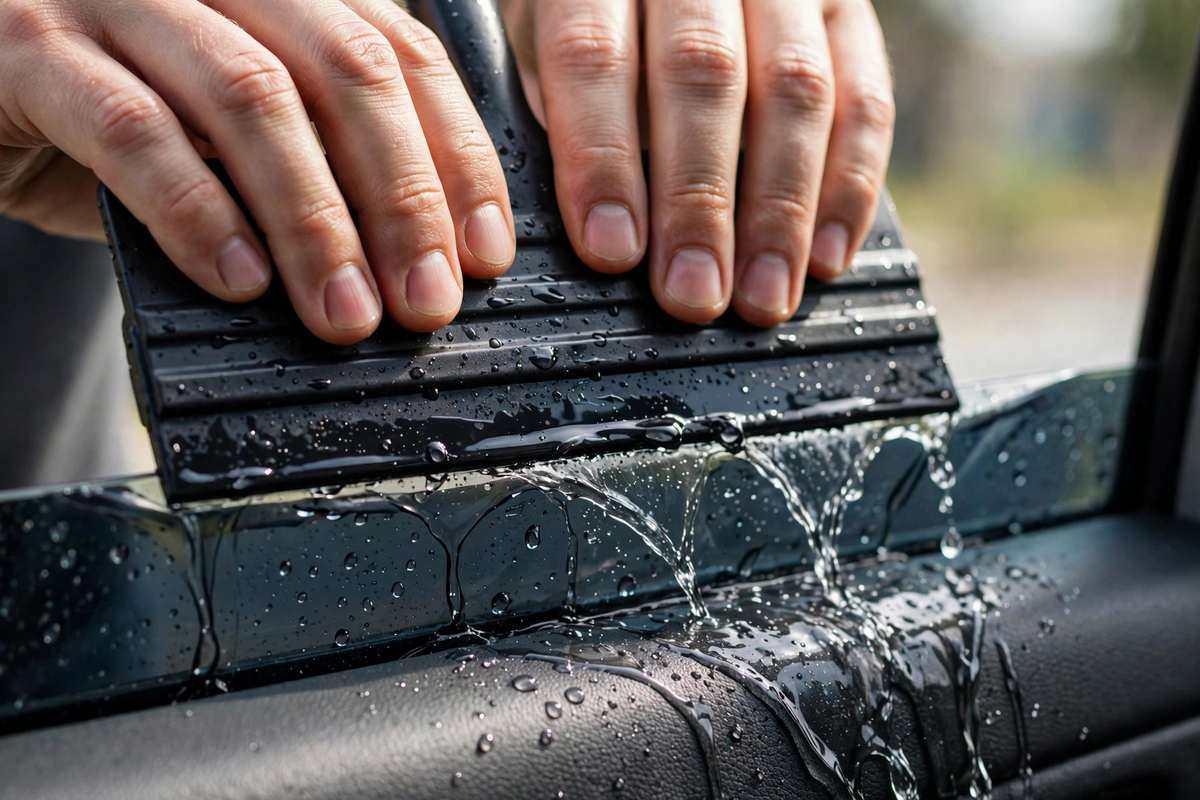
Window film adhesive cures through a combination of heat, light, and time. In summer, a car parked in the sun warms the glass well above the air temperature, which drives moisture out from under the film. In cooler months, the glass stays cooler, the sun is lower and weaker, and the same process takes longer.
Cooler air also holds less moisture, but that is not the issue. The problem is that the water used during installation gets trapped between the film and glass. Without enough heat, that water leaves slowly, and the film can look hazy or show small water pockets while it cures. That appearance is usually part of the process, not a defect.
For a deeper look at how different film types handle temperature swings, see the automotive window tinting page.
What affects cure time in Jeffersonville, IN
In Jeffersonville, IN, window tint cure time in cooler months depends on the film type, the glass, the weather, and the exposure. Automotive film and architectural film cure on different scales, and the same film cures at different speeds on different glass. No figure is stated here; the factors below are what the shop weighs when it answers.
The factors, in rough order of importance:
- Film type. Different film constructions hold different amounts of fitting solution and cure at different speeds. Ask the shop what to expect for the film line installed.
- Film thickness. Thicker films, such as security film, hold more water during installation and take longer to cure than thinner automotive film.
- Glass orientation. Glass that faces the sun cures faster than glass that stays shaded. South- and west-facing glass gets more direct sun than north-facing glass.
- Parking and exposure. A vehicle parked outside in direct sun cures faster than one kept in a garage, and a home window with curtains open cures faster than one kept covered.
The pattern is consistent: north-facing windows and garaged cars take the longest. South-facing glass that gets direct sun cures fastest, even in winter. Ask the shop which of your windows will be slowest, so you know what to expect.
If you are weighing film options for your home, the residential window tinting page covers how larger architectural installations differ from automotive work.
What affects cure time beyond temperature
Temperature is the biggest factor, but it is not the only one. Humidity, sun exposure, film thickness, and glass orientation all play a role in how long your tint takes to dry.
Humidity
Low humidity in winter can help, since drier air takes moisture away faster once the glass warms up. But a humid garage or a rainy stretch slows things down. Ventilation helps: air moving across the glass carries moisture away.
Sun exposure
A car parked outside facing south cures faster than one kept in a garage. For home windows, south- and west-facing glass cures faster than north-facing glass. Even a short period of direct sunlight each day helps drive moisture out.
Film thickness
Thicker films hold more water during installation and take longer to cure. Security film is thicker than standard automotive film, and that difference shows in curing time. No thickness figure is stated here.
Glass orientation
Vertical glass, such as home windows, sheds water downward, which helps. Horizontal glass, such as sunroofs and skylights, traps water and cures more slowly.
For a closer look at how ceramic film behaves in cold weather, read the ceramic window tinting page.
How to help your tint cure in cool weather
You cannot rush curing, but you can give your tint the best conditions. Here is what helps during cooler months in Jeffersonville:
- Park in direct sun whenever possible. Even a short period of direct sunlight each day helps drive moisture out.
- Ask about the defroster. Ask the shop how to use the defroster while the film cures, and follow the care guidance given for the film installed.
- Keep the interior reasonably warm. If you have a garage, park inside. If not, let warm air circulate on sunny days.
- Do not roll windows down until the shop says so. Ask when the film can be operated, and follow that guidance rather than a figure from another site.
- Ask about condensation. Ask the shop whether to wipe away condensation on the inside of the glass, and with what. Moisture on the film side slows curing.
For home windows, keep blinds or curtains open during the day to let sunlight hit the glass. If you have a residential window tinting installation, leave interior doors open to improve air circulation.
Common mistakes to avoid during curing
A common mistake is rolling down windows too soon. In cool weather, the adhesive has not bonded yet, and the film can shift or peel at the edges. Ask the shop when the windows can be operated, and wait until then.
Other mistakes:
- Washing the windows with a cleaner the shop has not approved. Ask which cleaners suit the film installed, and wait until the shop says cleaning is safe.
- Picking at small bubbles. They are moisture pockets and usually disappear on their own as curing completes. Picking creates permanent defects.
- Parking under trees that drop sap or debris. Sap bonds to fresh film and is hard to remove without damaging it.
- Using a scraper or ice scraper on the inside glass. Ask the shop before scraping the film side.
- Assuming the tint is defective because it looks hazy. Haziness during curing is normal in cooler months. It clears as curing completes.
If you see a bubble that grows, an edge that lifts, or haze that does not clear as curing should have completed, call the shop. Describe what you see and when the film was installed, and ask whether it needs a look.
When to call a professional
If your tint still looks hazy or bubbly well past the curing period the shop described, or if edges are peeling, it is time to have it inspected. Cooler weather can mask installation issues that would be obvious in summer.
Doyles Window Tinting handles window tinting in Jeffersonville for cars, homes, and businesses. If something looks wrong, call (812) 382-2757 during open hours and describe what you see.
For commercial spaces, the commercial window tinting page covers larger installations and the questions they raise.
Get help with window tinting in Jeffersonville
If you are planning a tint installation in cooler months, call Doyles Window Tinting at (812) 382-2757 during open hours to talk through what curing looks like for your specific vehicle or building.