
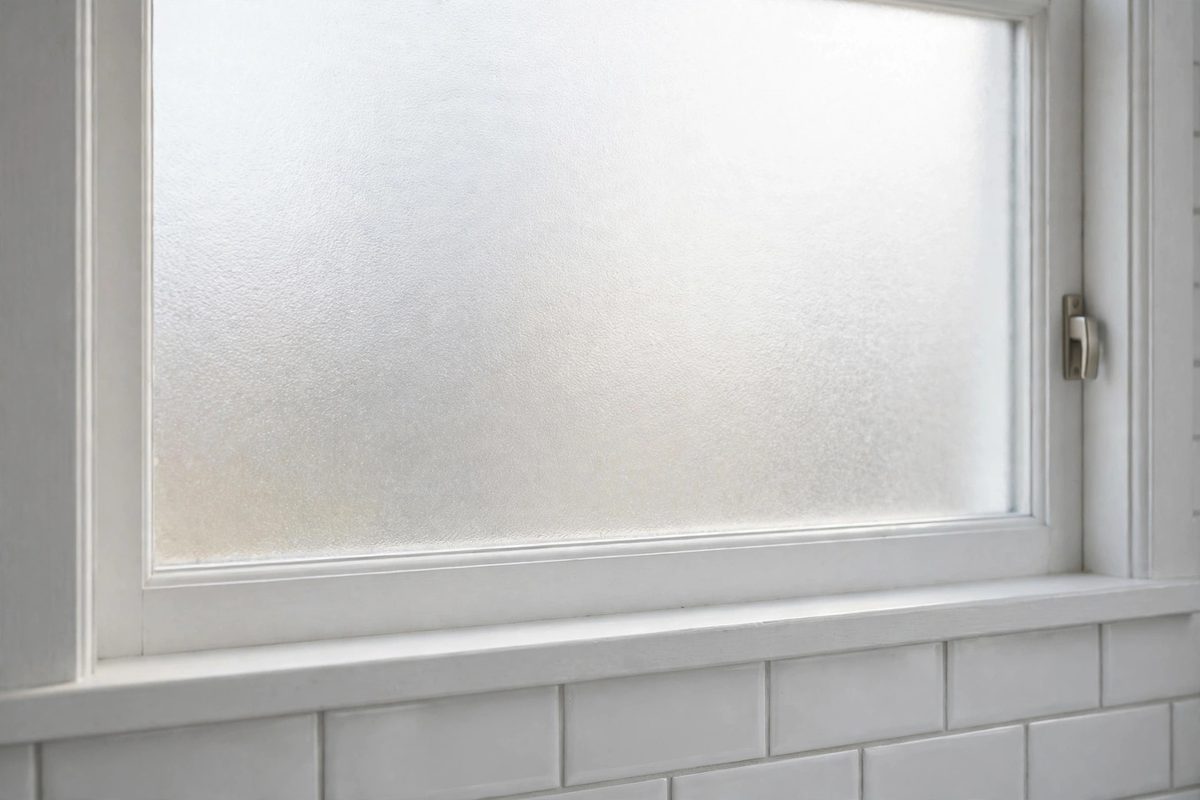
Frosted film, the core topic
Frosted film softens the view through glass while still letting light in. It is a decorative film type in its own right, and it is the starting point for most privacy-with-light conversations at home and at work.
Decorative film is discussed by room and by pane: what the glass is, who sees through it, and what look the room wants. The five topics below are the core of the conversation.
Frosted film softens the view through glass while still letting light in. It is a decorative film type in its own right, and it is the starting point for most privacy-with-light conversations at home and at work.
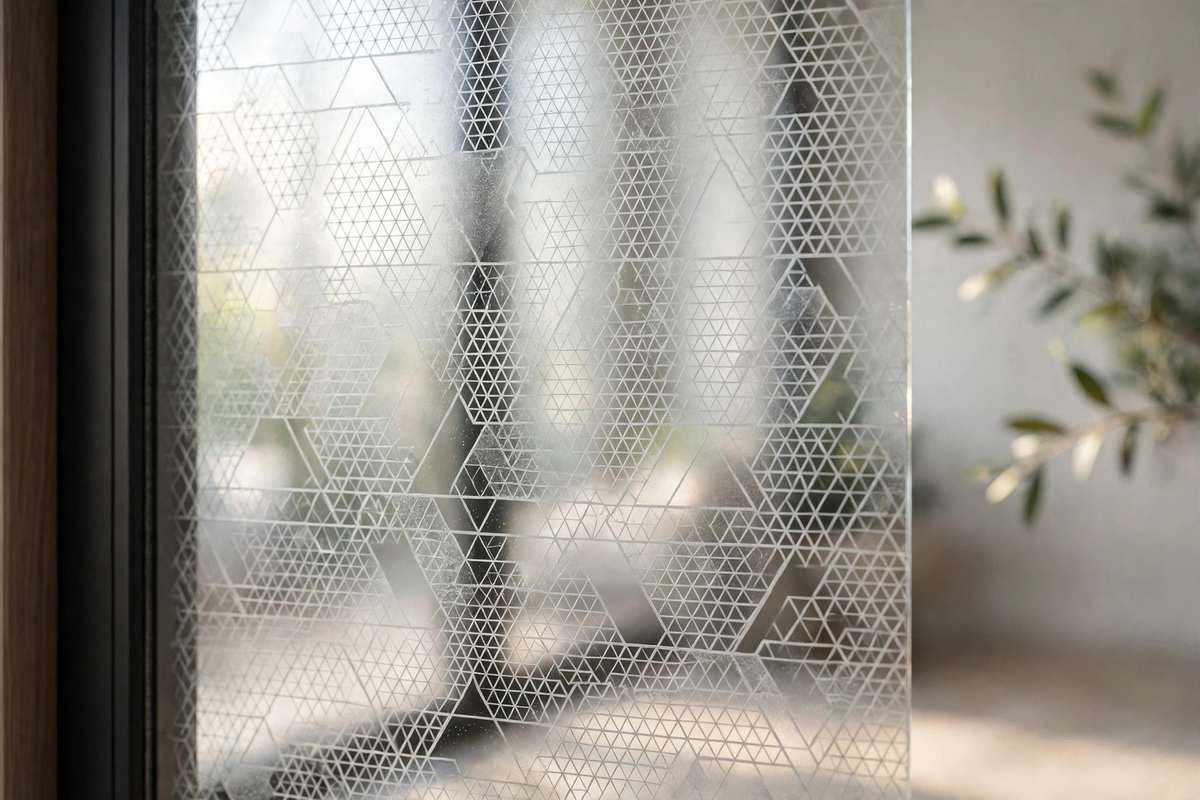
Patterned film adds texture and visual interest to glass: geometric repeats, organic shapes, and textures that break up a plain pane. Patterns are discussed by room, since what suits a bathroom rarely suits a storefront.
Gradient film moves from more to less obscured across a pane, and bands mark glass at eye level. Both are discussed for glass where full obscuring is more than the room needs.
Film that suggests the look of etched glass, or the look of stained glass, without replacing the pane. The look is the point here, and the conversation is about which look fits the room and the building.
Decorative film is chosen for privacy and for style at the same time, and the balance differs by room. How much obscuring is wanted, and at what hours, is the question that shapes the choice.
Decorative window film is film applied to glass to change its appearance and its see-through quality: frosted, patterned, gradient, and etched-look finishes that obscure the view while keeping light. Frosted film is often discussed, and it is treated on this page as a core decorative topic rather than as a separate subject: a frosted pane lets light through while softening shapes behind it, which is why it comes up for bathrooms, entry glass, office partitions, and street-facing panes alike. Patterned film adds a design to the pane, gradient film varies obscuring across the pane, and etched-look film suggests the appearance of etched glass. Each is discussed here in qualitative terms, without figures, and the choice among them is a matter of room, light, and taste.
In Jeffersonville, decorative film comes up in homes where street-facing glass needs privacy without curtains, in offices where meeting rooms need separation without darkness, and in storefronts where glass needs presence without losing light. Older homes with original sash and newer homes with large panes raise different questions about glass type, and street-facing facades in older areas raise review questions that belong at the start, with the Building Commissioner's office as the verification path. Decorative film is not security film and not solar film, and this page does not present it as either: where heat, glare, or breakage behavior is the question, those pages and those conversations apply. Call (812) 382-2757 during shop hours, Tuesday through Saturday, 9 AM to 5 PM, and ask about pricing for your glass.
Decorative film starts with the room and the look, not with the film. The steps below follow the room, the light, and the level of obscuring wanted.
Call the shop
Call (812) 382-2757 during shop hours, Tuesday through Saturday, 9 AM to 5 PM. The shop is closed Monday and Sunday. Say you are asking about decorative film.
Describe the room and the look
Which room, which panes, how much light the room needs, and what look you have in mind. Frosted, patterned, gradient, and etched-look film each suit different rooms.
Narrow patterns and privacy level
How much obscuring is wanted, at what hours, and from which side. Ask about pricing for your panes on the same call.
Plan the next step
Ask what the next step looks like for your glass, what information the shop needs, and what care questions to raise before anything is settled.
Describing the glass
Pane sizes, glass type, and what is already on the glass. A good description, pane by pane, is the foundation of the decorative conversation.
Light in the room
How much light the room needs, and from which direction. Frosted and patterned film keep light while softening the view, and the balance is set room by room.
Level of obscuring
Full frost, partial pattern, gradient, or band. The level of obscuring wanted is the central choice, and it differs by room and by use.
Edges and alignment
Patterns and gradients need alignment across panes to look intentional. Edges and alignment are worth looking at when work is finished.
Looking it over
Consistency from pane to pane, alignment of any pattern, and the state of the edges are what to look at. Ask what to look for.
Privacy, and at what hours
Privacy needs change by hour and by use. Say when privacy matters most, and from which side the glass is viewed.
Style that fits the building
What suits a bathroom rarely suits a storefront. The building, the room, and the existing style all shape the decorative choice.
What the glass allows
Older sash and special glass raise questions. Ask about the glass before assuming any decorative film suits it.
Care questions
Cleaning questions belong before the work. Ask, and note the answers, rather than guessing afterward.
01
What to ask: Bathroom glass needs obscuring that keeps light. Frosted film is the usual starting point, and the conversation covers how much obscuring is wanted and which panes it applies to.
→ Privacy with light is the test for bathroom glass.
02
What to ask: Meeting rooms and offices need visual separation without losing the open feel of the space. Frosted bands, gradients, and patterns are discussed for partitions and door glass.
→ Separation without darkness is the office test.
03
What to ask: Sidelights and entry panes are the first glass visitors see. Patterned and etched-look film are discussed for presence, alongside the privacy the entry needs.
→ Entry glass carries both style and privacy questions.
04
What to ask: Glass facing the street sees foot traffic and needs obscuring that still lets the room feel bright. The conversation covers level of obscuring, pattern, and any review questions the facade raises.
→ Street-facing glass gets style, privacy, and review questions together.
Decorative film is chosen room by room, because each room wants a different balance of light, privacy, and look. The topics below follow the rooms where decorative film comes up most.
Bathrooms and bedrooms
Privacy with light is the requirement. Frosted film is the usual starting point, with patterns discussed where the room wants more character.
Entryways and sidelights
First impressions and privacy together. Etched-look and patterned film are discussed for entry glass, with the building's style in mind.
Offices and meeting rooms
Partitions, door glass, and conference rooms. Frosted bands and gradients are discussed for separation that keeps the space feeling open.
Storefronts and street-facing glass
Presence and privacy at the front of the shop. Decorative film is discussed alongside the review questions street-facing facades can raise.
Stairwells and interior glass
Interior panes and glass doors between rooms. Decorative film softens the view between spaces while keeping light moving through the building.
How much obscuring
Full frost, partial pattern, or gradient. The level wanted differs by room, and naming it is the central choice in the conversation.
Light, and which direction
How much light the room needs, and where it comes from. Decorative film keeps light while softening the view, and the balance is set per room.
Review questions for facades
Street-facing facades in older areas raise review questions. Questions about review go to the Building Commissioner's office.
Decorative film is discussed for rooms where plain glass gives too much view, too little character, or both. The four below come up most.
Problem
Bathrooms, bedrooms, and street-facing rooms where plain glass gives more view than the room wants. Obscuring with light is the requirement.
What to discuss
Which panes, how much obscuring, and whether frosted, patterned, or gradient film fits the room.
Problem
Entry glass, partitions, and interior panes that feel blank. Pattern and etched-look film are discussed for presence and style.
What to discuss
The look wanted, the building's style, and how the pattern reads across the panes.
Problem
Open offices where meeting rooms feel exposed. Visual separation without darkness is the requirement, and bands and gradients are discussed for it.
What to discuss
Which partitions and doors, how much separation, and how the space should feel afterward.
Problem
Glass facing foot traffic, where the room behind it feels on display. Obscuring that keeps the room bright is the requirement.
What to discuss
Level of obscuring, pattern, and any review questions the facade raises, framed as questions.
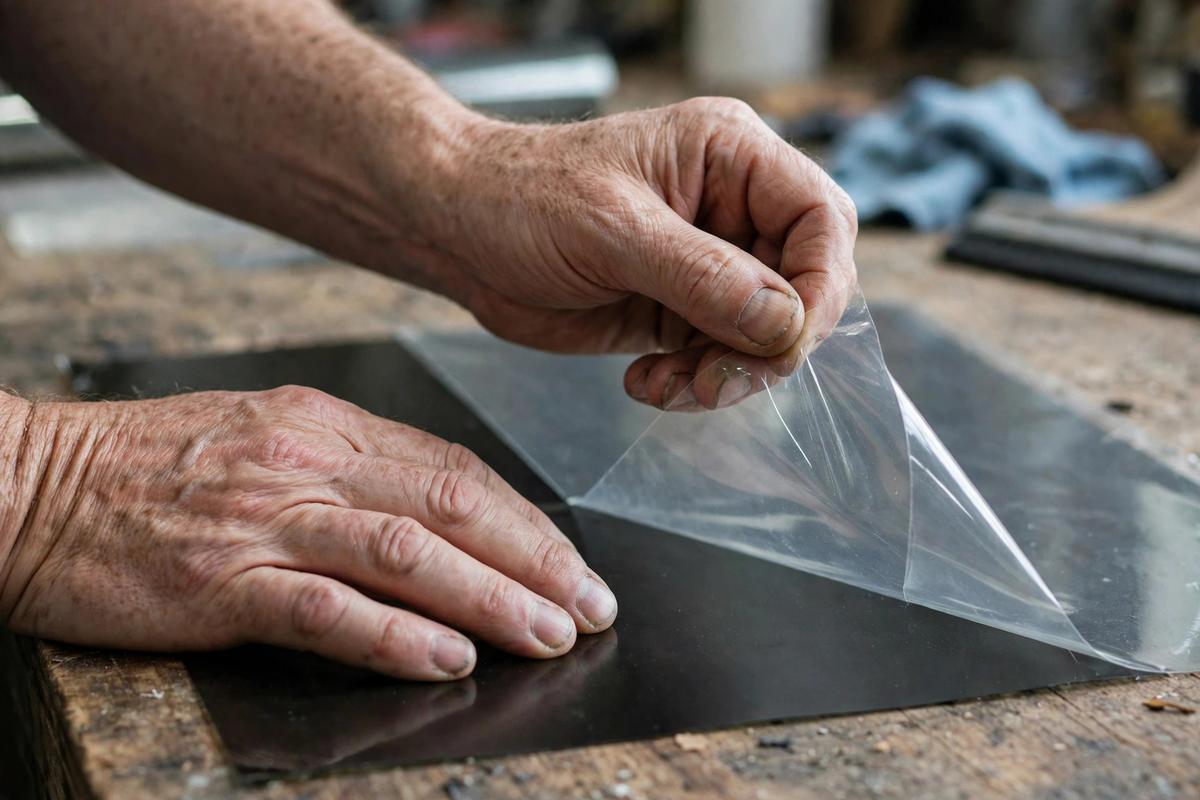
Decorative film is asked about for privacy, for style, and for light, usually all three at once on the same glass. For more background, see the Jeffersonville service-area page and the post on the best window tint for Jeffersonville summer heat.
Privacy that keeps the light
Frosted film softens the view while letting light through. That combination is the reason decorative film is often discussed for bathrooms and entries.
Style without replacing glass
Patterned and etched-look film change how glass reads without replacing the pane. The look is the point, and the room decides which look fits.
Separation in open spaces
Bands and gradients separate meeting rooms and work areas visually while keeping the space feeling open. The level of separation is set room by room.
Presence for street-facing glass
Glass facing the street carries the building's face. Decorative film gives it presence while keeping the interior bright, with review questions asked where they apply.
Google reviews ★★★★★4.8
The Google listing shows 4.8 stars across 345 reviews. Three of those reviews are quoted word for word further down this page, with the reviewer's name and the date Google shows.
Five-star reviews ★★★★★322
Most of the 345 reviews are five-star: 322 of them. The rest are spread across four, three, two, and one star.
All other ratings —23
Three four-star, four three-star, six two-star, and ten one-star reviews make up the other 23, and all of them count toward the 4.8 average.
Decorative film is a room-by-room conversation, and it starts with a call. Call Doyles Window Tinting at (812) 382-2757, Tuesday through Saturday, 9 AM to 5 PM, from the shop at 1107 Reeds Ln in Jeffersonville. Describe the rooms, the glass, and the look you have in mind, and ask about film, pricing, and any review questions. The Google listing shows 4.8 stars from 345 reviews.
Three five-star Google reviews, quoted word for word, with the name and date Google shows. The shop's overall rating is 4.8 stars from 345 reviews.
“This is the place to go for your tinting needs!! Everybody was super nice and very welcoming!! The tint came out perfect!! They also did the tint on my windshield! It looks amazing!! I love it!! Thanks Doyle’s for a great experience!!”
candice january
Local Guide · 5 stars · 2 months ago · Google review
“Doyle’s is the only place I take my vehicles to for tint. They do excellent work and have great prices. They stand behind their lifetime warranty no questions asked. The new ceramic tint is amazing. It keeps the inside of my vehicle’s cooler in the summer sun. The ceramic is definitely worth the extra money. If you’re looking for a trustworthy place that does excellent work then Doyle’s is the place for you.”
Michael Osborne
5 stars · 9 months ago · Google review
“If you're looking for reliable friendly service and extraordinary quality, then you have to go to Doyle's! I've taken 4 cars to him now and every time was an amazing experience. No bubbles or light gaps like I've had in the past from another other local shop. Can't say enough good things about Doyle's Window Tinting!”
Meghan Vest
5 stars · a month ago · Google review
Plain answers, with the limits stated. Anything about a specific room, pane, or price is a question for the call.
Film for home glass, with housing-era framing and the historic-home and association questions that need asking.
View Residential Window TintingFilm for offices and storefronts along Jeffersonville's corridors, including the review and sign questions that belong at the start.
View Commercial Window TintingFilm discussed for privacy at home and at work, including the honest point that privacy depends on which side of the glass is brighter.
View Privacy Window FilmFilm discussed in general, qualified terms for how glass behaves if it breaks, framed as a discussion topic for a call or visit.
View Security Window FilmThe premium film tier, discussed for heat feel and glare on vehicles and glass alike, with the coating disambiguation stated plainly.
View Ceramic Window TintingThe head page for vehicle film: vehicle types, coverage, windshield questions, and removal and re-tint.
View Automotive Window TintingCall (812) 382-2757 to ask about decorative film, or to ask which finish fits your rooms. The phone is the contact channel listed here. Mention the rooms, the panes, and the look you have in mind, and ask about pricing and the next step during shop hours.
Phone
(812) 382-2757Address
1107 Reeds Ln, Jeffersonville, IN 47130
Hours
Monday: Closed
Tuesday–Saturday: 9 AM–5 PM
Sunday: Closed
Call during shop hours