
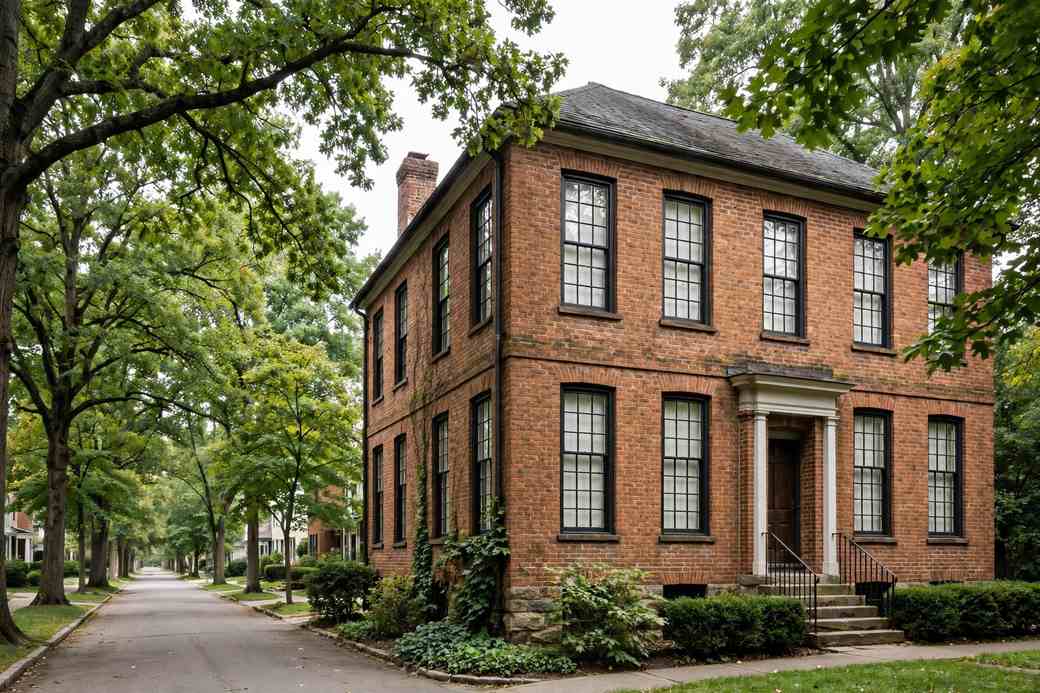
Home window tinting in Downtown Jeffersonville, IN is residential window film applied to the interior glass of existing windows, to reduce heat, glare, and ultraviolet light, and to add daytime privacy, without replacing the windows. Downtown homes span the historic core, with 19th- and early-20th-century stock, and newer river-view construction, and each raises different questions. This post works through what to expect, starting with the glass itself. For the area, see the Downtown Jeffersonville page.
The questions downtown homeowners ask are consistent: what decides the cost, will film darken the rooms, what happens with older glass, and whether any review applies. Each one is answered below, in that order, without figures this site does not publish.
What home window tinting in Downtown Jeffersonville, IN actually is
Home window tinting is residential window film: a thin sheet applied to the inside of existing glass that changes how the window handles sunlight, without replacing the window. It does not replace the frame or sash; whether it changes the look from the street depends on the film, and film that changes exterior appearance raises a review question downtown, covered below.
The film is cut to each pane and applied so it can be positioned and smoothed onto the glass. Once it has cured, it is bonded to the glass and cleaned like normal glass, following the care guidance the shop gives for the film installed. Curing takes time and varies with conditions; no time figure is stated here. See how long window tint takes to cure in cooler months.
Downtown homes carry a mix of glass: older sash windows, later double-pane units, and large modern panes in new river-view construction. Film choice follows the glass, not a single rule for the whole neighborhood. For the broader residential picture, see the residential window tinting page.
Why Downtown Jeffersonville homes raise film questions
Downtown homes raise film questions for three reasons that arrive together: older glass, riverfront sun, and the historic district. The Old Jeffersonville Historic District, listed on the National Register on October 6, 1987, covers roughly 203 acres and about 500 buildings at listing. Riverside Drive homes face south across the Ohio River, so the river adds reflected light to direct southern sun on large windows.
Three things come up repeatedly in this part of town:
- Fading near sunny windows. Sunlight through glass contributes to fading on hardwood floors and upholstery, alongside other causes. Film reduces the light reaching a room, but it cannot undo fading that has already happened.
- Glare on screens. A home office facing Spring Street or Court Avenue can catch afternoon glare that makes a monitor hard to read. Glare-control film is discussed for that problem, matched to the room so it does not darken it.
- Heat on upper floors. Two-story homes trap heat upstairs, and film on second-floor windows is one response, alongside shading and the cooling system. No bill claim is made here.
Downtown also carries commercial glass: storefronts and offices along Spring Street and the corridors face the same heat and glare questions, with the added review question for the historic district. If you own a building with street-facing glass, see the commercial window tinting page, and ask the review question before work starts.
What decides home window tinting cost in Downtown Jeffersonville
No prices are published on this site, and no figure is stated here. A quote for a downtown home depends on the film type, the number and size of panes, the condition and access of the glass, and whether old film has to come off first. A home with tall sash windows carries far more glass than a home with the same number of openings and smaller panes.
What moves the figure:
- Film type. Dyed film sits at the entry point of the market. Ceramic film sits at the premium end and is discussed for heat control with less reliance on darkness. Clearer options suit glass where appearance matters.
- Glass condition. Older panes with chipped edges, failed seals, or heavy deposits need prep work, which adds to the job. A failed double-pane seal is a window question first, not a film question.
- Access. Second-story windows, storm windows, and tight downtown lots change how the work is done and how long it takes to set up.
- Amount of glass. Larger jobs spread setup across more glass. A whole-home job and a single-room job are different conversations.
Ask what is included in a quote before comparing it with another: film, fitting, prep, and removal where old film exists. Describe the panes, their sizes, and their condition when you call, and ask the review question for any home in the historic district.
Choosing the right film for your Downtown Jeffersonville home
Choosing film comes down to three questions: how much heat control the room needs, how much visible light the room should keep, and whether privacy or holding glass together matters. Answer those for each room, and the film conversation narrows quickly.
Heat and UV control
If the goal is a cooler upstairs and less fading on floors and furniture, ceramic film is the premium tier discussed for heat control with less reliance on darkness, and clearer options suit glass where appearance matters. No performance figure is stated here. See the ceramic window tinting page and the residential window tinting page.
Privacy without darkness
Downtown lots sit close together, and a neighbor's window can look straight into yours. Privacy and frosted film give daytime privacy without darkening the room, and frosted film suits bathrooms and street-level rooms. See the privacy window film page and the decorative window film page.
Security and safety
Where large single panes sit near grade, safety and security film are discussed for holding glass together, which matters where glass sits near living areas. What either film can and cannot do is a question for the film line and the glass; ask before assuming. See the security window film page.
If you are unsure which category fits, describe the glass and the sun exposure when you call, and ask which panes are worth filming and which are not. A straight answer about a pane that does not need film is as useful as a recommendation for one that does.
What installation involves
Installation for a downtown home is room-by-room work. Ask how furniture, sills, and each pane are handled during the work. No duration is stated here, because the time depends on the number and size of panes, the glass condition, and access. Ask the shop what to expect for your home when you call.
The process, in outline:
- Each pane is cleaned, and paint or sticker residue is dealt with before film goes on.
- Film is cut to size for each pane, with a small gap at the edge.
- The film is positioned on the glass and smoothed out, with the fitting solution worked out from under it.
- Edges are trimmed, and each pane is checked for bubbles or debris.
- The film is left to cure. Curing takes time and varies with temperature, humidity, sunlight, and film type. Ask the shop what to expect and what to avoid while film cures.
During curing, film may look slightly hazy or show small water pockets. That can be part of the process and clears as curing completes. Ask the shop when the film can be cleaned and what to use, and follow that guidance rather than a figure from another site.
One thing to plan for: access to each window is needed, so a room packed with furniture will need a clear path. Clearing it before the work starts saves time and keeps belongings safe.
Common mistakes to watch out for
The biggest mistake homeowners make is choosing film on price alone and ending up with a product that bubbles or shifts color. The second is skipping the questions that apply to the house itself: the glass, the exposure, and whether any review applies.
Watch for these:
- Filming failed double-pane glass. If the seal is already compromised, film does not fix fogging. Check every unit before choosing film.
- Going too dark. A dark film on a north-facing window makes the room gloomy without a matching benefit. Match the film to the exposure.
- Entry-tier film on sun-blasted glass. Dyed film suits low-exposure windows, but on a west-facing pane its color stability over time is the discussion point. Ceramic and carbon films hold their color longer.
- Do-it-yourself fitting on large panes. A tall sash pane is not a beginner job. Trapped debris and creases are hard to undo.
- Not asking what is put in writing. Ask what the shop states in writing about the film and the install, and read it before booking.
Jobs that have to be redone usually trace back to fitting, not to the film alone. The film is one part of the job; preparation and fitting decide whether it holds up. Ask how prep and fitting are handled before booking.
When to call a professional
Call a professional when more than two or three windows are involved, when the glass is large or high, when the windows are old or carry a factory finish, or when you are not certain the windows can take film at all. Downtown Jeffersonville has a lot of older glass, and the review question for the historic district belongs in the conversation from the start.
Describe the glass, the exposure, and the rooms when you call, and ask the questions that apply to your house: film type, review, and what is put in writing. If a window should not be filmed, that answer is as useful as a recommendation.
If you are also thinking about your vehicle, the automotive window tinting page covers cars, with the law guide for the rules that apply.
Get help with window tinting in Jeffersonville
Call Doyles Window Tinting at (812) 382-2757 during open hours and describe your windows, the rooms behind them, and whether the home sits in the historic district. The shop is at 1107 Reeds Ln, Jeffersonville, IN 47130, open Tuesday through Saturday, 9 AM to 5 PM.