
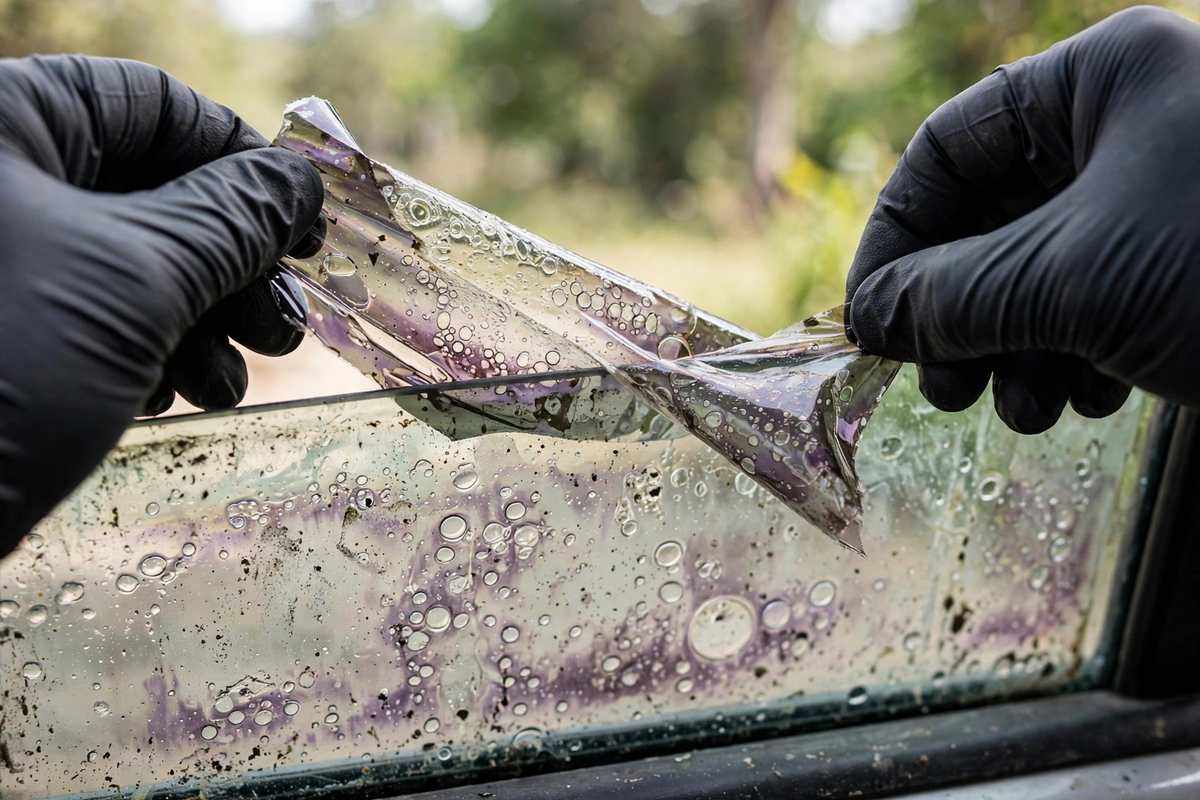
Old window tint generally comes off by softening the adhesive, peeling the film slowly at a shallow angle, and dissolving the leftover glue with a suitable remover, never by scraping dry film with a metal blade. That outline sounds simple, and on a flat side window it can be. On rear glass with defroster lines, on curved panes, and on film that has bonded hard over years, the risks rise sharply. This post covers what removal involves, what can go wrong, and when to call a professional.
Why old window tint fails and when it needs to come off
Window film breaks down from the inside out. The adhesive layer that bonds film to glass degrades under ultraviolet exposure, and over years in southern Indiana sun it turns brittle, cloudy, or purple. Once that happens, the film no longer does its job, and the adhesive keeps bonding harder to the glass the longer it stays.
You should remove old tint when you see any of these:
- Bubbles or blisters that grow. Trapped moisture and adhesive failure.
- Purple or hazy discoloration. Dye breakdown, common on older dyed films.
- Peeling corners or edges that catch on window seals and rip further.
- Reduced visibility at night. A safety issue, especially on side windows.
- Film that no longer meets the law. Degraded film can change how a window reads. The Indiana and Kentucky tint law guide covers the rules that apply.
Leaving failing film on the glass does more than look bad. The adhesive continues to bond to the glass so tightly that removal gets harder and risks scratching. If you are planning new automotive window tinting, removal of the old film comes first, and the glass must be clean before new film goes on.
What removal involves: tools and materials
Removal work generally involves heat or steam to soften adhesive, plastic tools to lift film, and a suitable remover for the leftover glue. Here is what the job involves:
- Heat gun or steamer. A handheld steamer suits curved glass; a heat gun suits flat panes. Either must keep moving to avoid overheating one spot.
- Plastic blades or a plastic scraper. Never a metal blade on bare glass, and never near defroster lines.
- A dedicated adhesive remover. Ask the shop which remover suits the glass. Some common cleaners are not suited to the job.
- Covering and tape. For the sun-assisted method on house or office windows, where heat and time soften the adhesive.
- Spray bottle, soft towels, and soapy water.
- Gloves and eye protection. Adhesive removers are harsh on skin and eyes.
Skip the metal razor blade. A metal blade dragged across glass at the wrong angle leaves permanent scratches, and on tempered glass near an edge it can chip. Plastic tools do the same job without that risk.
What the removal process involves
The process is the same whether the glass is a car side window or a storefront pane: soften, peel, then dissolve. Rushing any of the three steps is what causes damage. The outline below describes what each step involves, not a recommendation to do it yourself on every pane. Defroster glass is called out separately, because it carries the highest risk.
1. Soften the adhesive
For car glass, heat is applied evenly and kept moving, so the film feels warm and pliable without overheating any one spot. For house or office windows, the film is wetted and covered so sun and time soften the adhesive. The goal in both cases is adhesive that releases, not film that tears.
2. Peel slowly at a shallow angle
One corner is lifted with a plastic blade, and the film is pulled back almost parallel to the glass. Pulling straight out or upward stretches the film and leaves adhesive behind. Heat or steam stays in motion as the peel continues, so the adhesive stays soft ahead of the peel line.
3. Dissolve the leftover glue
The remaining adhesive is treated with a suitable remover, given time to work, then wiped with a soft towel. Stubborn patches get a second application and a plastic scraper held nearly flat. Never scrub with an abrasive pad, and never use a metal blade.
4. Clean and inspect
The glass is finished with soapy water and a clean towel, then checked at an angle in daylight. Any haze left behind is residual adhesive, not damage, and a second application of remover will lift it.
Removal methods and when each fits in Jeffersonville, IN
Jeffersonville summers bring heat and humidity, which help sun-assisted methods but make car interiors hot to work in. Plan car tint removal for early morning or a shaded space. For home and office windows, the method follows the glass and the access, not a single rule.
Three methods cover almost every situation:
- Heat gun plus plastic blade. Suited to flat automotive glass, where heat can be kept moving evenly.
- Steamer. Suited to curved rear windows with defroster lines, because steam softens adhesive without overheating the grid. Even so, defroster glass is the highest-risk job.
- Sun-assisted method with covering. Suited to residential and commercial panes where edges cannot be reached with a heat gun.
Rear windows with defroster lines deserve a warning: the lines are thin conductive paint, and aggressive scraping or a metal blade will sever them. A severed grid means a non-working defroster and a repair that can cost more than the removal. If the film sits on defroster glass, that alone is a reason to call a professional.
Many Jeffersonville homeowners considering residential window tinting ask about stripping old film before installing new, especially on west-facing windows that take the worst of the afternoon sun. The glass must be clean and free of adhesive before new film goes on.
Common mistakes that damage glass during tint removal
Most removal damage comes from four mistakes, and all four are avoidable:
- Using a metal razor blade. It scratches glass and chips tempered edges. Plastic only.
- Peeling dry film. Dry adhesive bonds harder the more you pull. Soften first, every time.
- Overheating one spot. A heat gun held still can crack tempered glass from thermal stress. Keep it moving.
- Scraping across defroster lines. Those lines are paint, not wire. No blade of any kind should cross them aggressively.
One more: do not use acetone or lacquer thinner to dissolve adhesive. They evaporate too fast to work, and on some aftermarket glass they can stain the surface. A dedicated remover suited to the glass is the right chemistry. Ask the shop if you are unsure.
If you are stripping film from a storefront or office, coordinate the work around business hours. Call during open hours to talk through timing for a commercial window tinting project, so a lobby or sales floor is not disrupted.
When to call a professional for window tint removal in Jeffersonville
Call a professional when the film is very old, when it is on a rear window with defroster lines, when it covers more than a few panes, or when the glass is original to a classic or vintage vehicle. Those are the jobs where the risk of damage outweighs the saving from doing it yourself.
Doyles Window Tinting handles window tinting in Jeffersonville. Ask whether removal is offered together with new film, and how the old film, the glass, and the new install are handled. Call (812) 382-2757 during open hours to talk through your glass.
Professional removal also protects the glass itself. If a pane is damaged during a do-it-yourself strip, that damage is on the person doing the work. Ask what the shop states in writing about damage and rework before booking.
Get help with window tinting in Jeffersonville
If the film on your car, home, or storefront is bubbling, purple, or peeling, call Doyles Window Tinting at (812) 382-2757 during open hours to talk through removal and new film without risking the glass.