
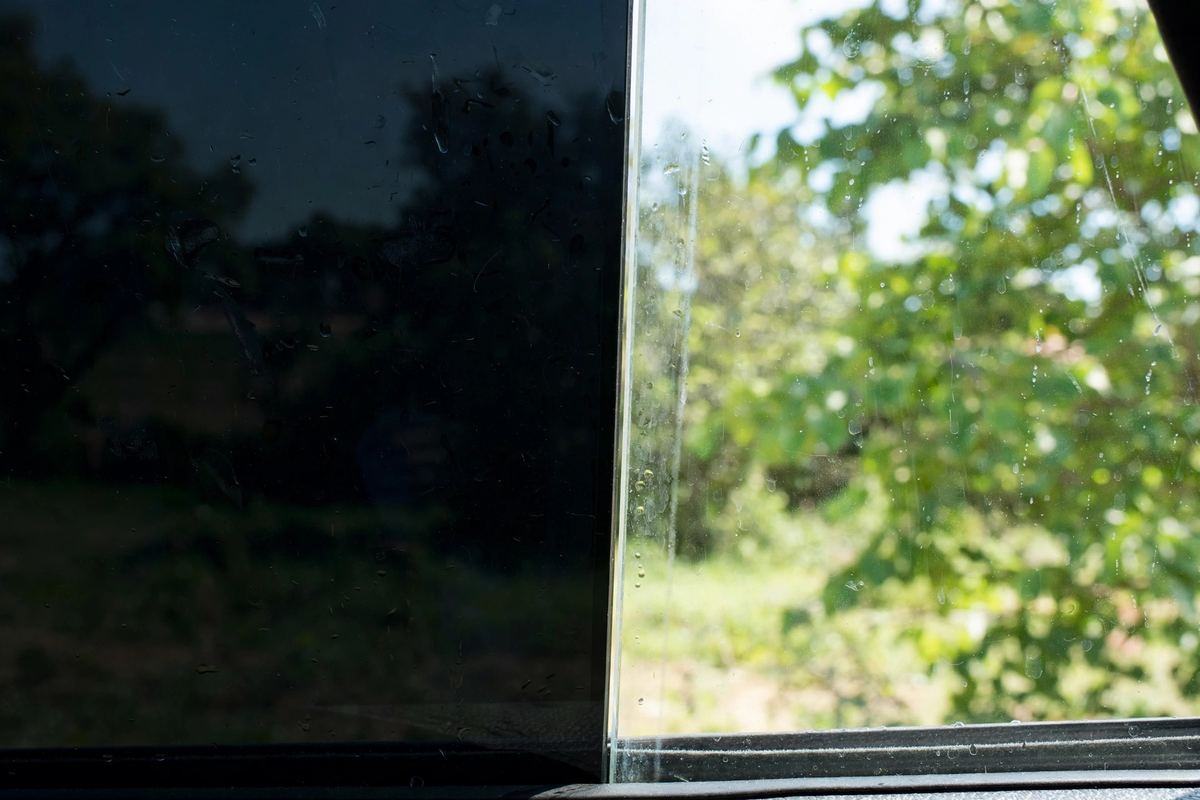
Your car tint is turning purple or bubbling because the film itself has broken down: either the dye has degraded from ultraviolet exposure, or the adhesive has failed and trapped air and moisture under the film. In Jeffersonville, where summers are hot and sunny and winters bring freeze-thaw cycles, both failure modes show up regularly. This post covers why each happens, what can be fixed, what must be replaced, and how to choose film that does not fail the same way.
Why does car tint turn purple in Jeffersonville, IN?
Car tint turns purple in Jeffersonville, IN when the dye layer inside a low-cost dyed film breaks down under ultraviolet radiation. The purple color is the dye fading unevenly: the pigments degrade at different rates, and the color that is left reads as purple.
Dyed film that drivers get from budget shops uses organic dyes suspended in a thin polyester layer. Those dyes are cheap and they look great on day one. But southern Indiana sun, summer after summer, breaks them down. The film does not turn purple overnight; it shifts gradually, and the change is easiest to see against untinted glass.
There is a second cause people miss: unsuitable cleaners. Some common glass cleaners are not suited to film, and using one repeatedly can speed up dye and adhesive breakdown. Ask the shop which cleaners suit the film installed, and follow that guidance. See how to care for ceramic tint.
If your tint is already purple, no cleaner, polish, or home remedy will bring it back. The dye is gone. Replacement is the only fix, and the shop handles that with automotive window tinting using films that resist the same failure.
What causes window tint to bubble in Jeffersonville, IN?
Window tint bubbling in Jeffersonville, Indiana comes down to trapped air or moisture under the film, and there are four common reasons it happens.
1. Poor installation
Dust, lint, or a slipped squeegee during installation leaves tiny pockets that grow into visible bubbles. A proper install happens in a clean space, and the film is squeegeed flat before it ever sees daylight. Contamination under the film is a fitting problem, not a film problem.
2. Adhesive failure
The adhesive layer has a lifespan. Over years in a hot climate, it can let go, especially along the defroster lines on the rear window, where heat concentrates. Once the adhesive fails, the film lifts and bubbles spread from the failure point.
3. Defroster grid heat
Rear window defroster lines get hot. Cheap film cannot handle the localized heat, and bubbles form in neat rows right over the grid. This is a common bubbling-tint question in Jeffersonville.
4. Moisture and temperature swings
Jeffersonville sits in a climate with humid summers and cold winters. That expansion and contraction cycle works the edges of the film. Small edge lift lets in moisture, and moisture plus sun leads to bubbles and eventually to peeling.
Small bubbles near an edge can sometimes be pressed out when the install is fresh. Bubbles in the middle of the glass, or any bubble that has been there a while, mean the film has failed and needs to come off. See how to remove old window tint without damaging glass.
Can bubbling window tint be fixed, or does it need replacement?
Bubbling window tint can be fixed only if the bubble is fresh, small, and near an edge. Everything else needs replacement. Here is the honest breakdown.
- Fresh edge bubbles: sometimes pressable by a professional with a squeegee and heat gun, when the install is recent.
- Bubbles over defroster lines: replace the film. The grid heat will keep re-creating them.
- Bubbles in the center of the glass: replace. The adhesive has failed across that area.
- Bubbles plus purple or brown discoloration: replace. The film is chemically done.
- Peeling edges with trapped moisture: replace. Moisture under film can trap haze and cause further damage.
One more thing worth knowing: bubbling tint is a safety issue, not just a looks issue. Bubbles scatter light at night and cut down on visibility, and a film that is lifting can peel off in a sheet while you are driving.
When replacement is the answer, the film you choose matters more than the price. A ceramic tint uses non-dyed ceramic particles that do not fade to purple and handle heat far better than dyed film, which is why it is the film most often recommended for a replacement that should not fail the same way.
What decides the cost of replacing purple tint in Jeffersonville?
No prices are published on this site, and no figure is stated here. Replacing purple tint in Jeffersonville, Indiana depends on film type, vehicle size, and how much old film has to be stripped. A vehicle with film baked on hard takes more removal work than one where the film lifts cleanly.
What moves the figure:
- Dyed film replacement: the cheapest option, but it will fade again over time. The same failure returns.
- Carbon film replacement: no dye, so no purple. A solid middle ground.
- Ceramic film replacement: the strongest heat rejection and ultraviolet protection, and the color stays true.
- Old film removal: adds to the job when the purple film is baked on and resists removal.
Larger vehicles carry more glass, so SUVs and trucks cost more than sedans. A single window, such as a rear window with defroster bubbling, is a smaller job than a full vehicle. Describe the vehicle and the film when you call.
One cost most people forget: cheap film costs more over time. A dyed job that fails and has to be done twice costs more than one ceramic job that holds its color. Compare the whole life of the film, not just the first figure.
Common mistakes that make tint fail faster
Most premature tint failure traces back to one of these mistakes, and every one of them is avoidable.
- Using a cleaner the shop has not approved. Some common cleaners are not suited to film. Ask which cleaners suit the film installed.
- Rolling windows down too soon. Give fresh film time to cure, longer in cold weather. Ask the shop when the windows can be operated. The adhesive needs time to bond.
- Scraping ice off tinted windows. A plastic ice scraper will gouge film. Let the defroster do the work, on a gentle setting.
- Parking in full sun every day. Ultraviolet light is what breaks down dye. A garage, carport, or windshield shade slows fading.
- Choosing film by price alone. The cheapest quote is usually dyed film, the tier most prone to turning purple over time.
- Letting a small bubble go. A bubble is an entry point for moisture. It grows.
There is also a legal piece people forget. Indiana law sets limits on how dark tint can be, and a failed film that has turned hazy or purple can draw attention. The Indiana and Kentucky tint law guide covers the rules that apply, without figures here.
If you are also dealing with faded film on the house or the shop, the same ultraviolet problem applies to glass in buildings. Homeowners in the area ask about home window tinting for the same reason: sun breaks down film and fades what sits behind the glass.
When to call a professional
Call a professional when a bubble grows, when the purple covers more than a small patch, or when the film is lifting at the edges. Those are all signs the film has failed at the adhesive or dye level, and replacement is the honest answer.
A professional strips the old film, cleans the glass down to a bare surface, and installs new film in a controlled space. If you are weighing repair versus replacement, call during open hours and describe what you see; a straight answer about which one fits is part of the job.
Drivers who want the film to hold its color usually step up to carbon window tinting, which uses no dye at all and holds its color over time. That is the fix that actually solves the purple problem.
Get help with window tinting in Jeffersonville
Purple or bubbling film will not fix itself, and time in the sun makes the old film harder to strip. Call during open hours to talk through whether repair or replacement is the right call for your car.
Call Doyles Window Tinting at (812) 382-2757 during open hours to talk through your tint replacement in Jeffersonville.